
The steel ladle is a core thermal device in the steelmaking-continuous casting process, responsible for carrying high-temperature molten steel, completing ladle refining, and temperature control. Its refractory lining directly determines the ladle's service life, the cleanliness of the molten steel, and the overall cost of steelmaking. Under complex conditions such as high-temperature molten steel scouring, slag erosion, rapid heating and cooling cycles, and vacuum/argon blowing, refractory materials must simultaneously meet five core requirements: high temperature resistance, slag corrosion resistance, thermal shock resistance, structural stability, and low pollution. They are crucial basic materials for ensuring continuous and efficient steelmaking operations.
I. Layered Structure and Functional Positioning of Steel Ladle Refractory Materials
Modern steel ladle linings employ a three-layer composite structure. Each layer of material performs its specific function and works synergistically to achieve the optimal combination of insulation, support, and erosion resistance.
Insulation Layer (Outermost Layer): Its core function is to reduce heat loss and lower the temperature of the ladle shell. Lightweight insulation materials such as perlite bricks, cenosphere bricks, and lightweight high-alumina castables are used, with a thickness of 30–50 mm, balancing insulation efficiency and structural stability.
Permanent Layer: Provides support and secondary insulation, protecting the ladle shell. Commonly used materials include clay bricks, high-alumina bricks, or high-alumina monolithic castables, with a thickness of 80–100 mm, possessing good high-temperature strength and structural integrity.
Working Layer (Direct Contact with Molten Steel/Slag): Withstands the most severe operating conditions, divided into the slag line zone, ladle wall zone, and ladle bottom zone. This is the core aspect of material selection, directly determining the ladle's furnace lifespan.
II. Types and Application Scenarios of Core Refractory Materials for Steel Ladles
(I) Special Materials for Slag Line Area: Core Materials for Slag Erosion Resistance
The slag line area is subject to long-term erosion by high-alkalinity molten slag, high-temperature oxidation, and thermal shock, making it the most vulnerable part of the ladle lining. The mainstream materials are:
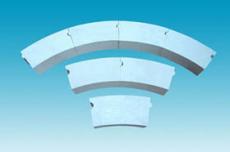
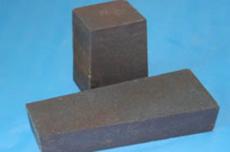
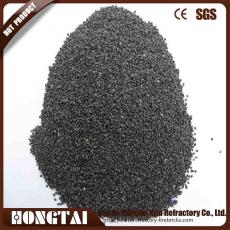
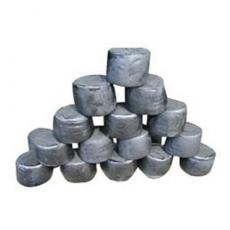
* Magnesia-carbon bricks (MgO-C): Made primarily of fused magnesia and graphite, with added antioxidants, they possess high refractoriness, excellent slag penetration resistance, low thermal expansion coefficient, and strong thermal shock resistance. They are standard for slag lines in large and medium-sized steel ladles, with a carbon content typically between 10% and 18%, suitable for demanding conditions such as LF furnace refining.
* Low-carbon/Ultra-low-carbon magnesia-carbon bricks: With a carbon content ≤8%, they reduce the risk of carbon increase in molten steel, suitable for clean steel and special steel smelting, balancing environmental protection and steel quality assurance.
* Magnesia-calcium-carbon bricks: Possessing dephosphorization and desulfurization functions, they improve the cleanliness of molten steel and are suitable for high-quality steel refining.
(II) Ladle Wall/Bottom Working Layer Materials: Prioritizing Erosion Resistance and Integrity
* **Alumina-Magnesium-Carbon Bricks:
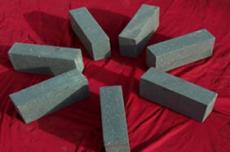
** Made from corundum, magnesia, and graphite, these bricks offer excellent resistance to aluminate slag erosion and thermal shock, with moderate cost. They are widely used for the walls and bottoms of small and medium-sized ladles.
* **Magnesium-Aluminum Spinel Castable/Corundum-Spinel Castable:
** Monolithic refractory materials, constructed using integral casting/precast blocks. They are seamless, impermeable, crack-resistant, and have high high-temperature strength. Suitable for large continuous casting ladles, they allow for overlay casting maintenance, significantly extending service life.
* **High-Alumina Castable:
** Cost-effective, used for small ladles or low-requirement applications, providing basic thermal shock resistance and erosion resistance.
(III) Functional Refractory Materials
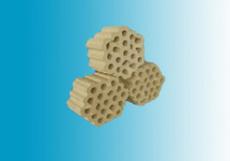
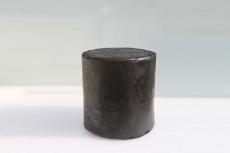
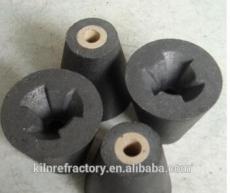
Permeable bricks: Divided into corundum, chromium corundum, and magnesia-carbon materials, used for bottom-blowing argon stirring in steel ladles. They require high permeability stability, anti-clogging, corrosion resistance, and 100% blow-through rate, making them key functional components for ladle refining.
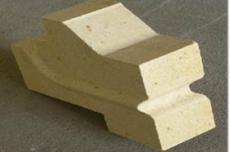
Sliding nozzles/seat bricks: Controlling molten steel flow, using high-density corundum and alumina-zirconium carbon materials, resistant to thermal shock and molten steel erosion, ensuring continuous and stable continuous casting.
III. Core Principles for Selecting Ladle Refractory Materials
Matching by ladle capacity: For large ladles (≥100t), magnesia-carbon brick slag line + corundum-spinel integral casting of the ladle wall is preferred; for medium and small ladles, alumina-magnesia-carbon bricks + high-alumina castables can be used to balance cost and lifespan.
Matching by steel type: For clean steel and special steel, low-carbon magnesia-carbon bricks and magnesia-calcium-carbon bricks are used to prevent carbon increase and impurity contamination; for ordinary carbon steel and low-alloy steel, conventional magnesia-carbon bricks and alumina-magnesia-carbon bricks can be used.
Optimization based on process conditions: Ladle refining (LF, RH, VD) conditions are demanding, requiring the use of high-purity, high-density alkaline materials; for fast-paced continuous casting lines, integral casting of the lining is prioritized to reduce maintenance time.
Life cycle cost priority: Considering material unit price, service life, maintenance frequency, and energy loss, high-performance materials, although more expensive per use, can significantly reduce refractory consumption per ton of steel.
IV. Technological Development Trends:
High Performance, Low Carbon, Green Low Carbon/Carbon-Free: Reducing the use of carbon-containing materials, developing low-carbon magnesia-carbon bricks and carbon-free spinel materials to adapt to ultra-low carbon steel smelting, reducing carbon emissions and steel pollution.
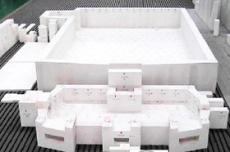
Integral and Prefabricated: Monolithic refractory materials replace traditional brickwork; integral casting and prefabricated block assembly become mainstream, improving the integrity, sealing, and maintenance efficiency of the lining.
High Purity and Upgraded Properties: Utilizing high-purity raw materials such as fused magnesia, tabular corundum, and pre-synthetic spinel, and adding nano-additives and metal antioxidants, enhances high-temperature strength and corrosion resistance.
Green and Environmentally Friendly: Chromium-free alternatives to chromium-based materials avoid heavy metal pollution; recycling and reuse of waste refractory materials reduces solid waste emissions, aligning with dual-carbon goals.
Long Lifespan and Intelligent Manufacturing: Through optimized material formulations and improved structural design, combined with online monitoring and precise maintenance, the lifespan of the ladle is increased from dozens to over a hundred cycles, reducing operation and maintenance costs.
V. Conclusion
Ladle refractory materials are the "high-temperature armor" of steel smelting, and their technological level directly affects steelmaking efficiency, steel product quality, and enterprise economic benefits. From traditional brickwork to monolithic casting, from high-carbon to low-carbon and clean, from single-material to composite modification, ladle refractory materials are continuously upgrading towards high performance, long lifespan, low carbon, and green manufacturing.
Looking ahead, with the increasing demand for specialty steels and clean steels and increasingly stringent environmental policies, refractory material companies need to focus on material innovation, process optimization, and full life-cycle services to provide safer, more efficient, and more economical refractory solutions for the steelmaking process, thereby contributing to the high-quality development of the steel industry.



 HOME
HOME