
Silicon carbide refractories are widely used in high‑temperature parts of iron and steel furnaces due to high thermal conductivity, good thermal shock resistance and excellent wear resistance. This article compares conventional silicon carbide bricks and nitride‑bonded silicon carbide bricks in terms of composition, properties and suitable applications, to provide a clear reference for material selection in blast furnaces, steelmaking furnaces, hot blast stoves and runner systems.
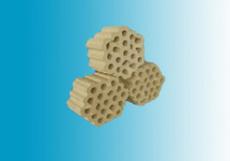
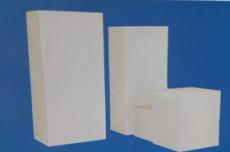
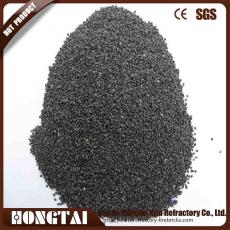
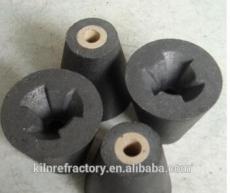
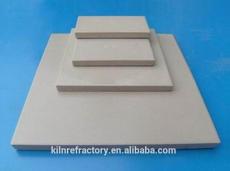
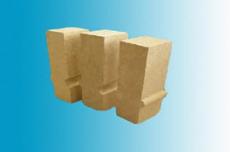
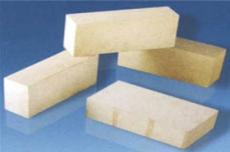
Conventional silicon carbide bricks use silicon carbide (SiC) as the main aggregate. The bonding phase is generally clay, alumina or silicate binder. They are produced by normal sintering without nitridation reaction.
Nitride‑bonded silicon carbide bricks also use SiC as aggregate, but form a high‑strength bonding phase through high‑temperature reaction sintering in nitrogen atmosphere. The binder is in‑situ synthesized silicon nitride (Si₃N₄), which forms an interlocking network structure between SiC grains, greatly improving high‑temperature performance.
Conventional SiC bricks have relatively high refractoriness, good thermal conductivity, low thermal expansion and good abrasion resistance. They are stable under medium temperature and weak corrosion conditions. Their cost is low and production is simple.
However, their alkali resistance, oxidation resistance and slag resistance at high temperature are limited. The oxide bonding phase is easily eroded at high temperature, leading to structural peeling and short service life in severe environments.
Nitride‑bonded SiC bricks show outstanding comprehensive performance. They have extremely high resistance to alkali metal corrosion, which is critical in blast furnace conditions. They also provide excellent slag resistance, oxidation resistance and structural stability up to 1600°C.
In addition, they have outstanding thermal shock resistance, high hot‑strength, low creep and strong resistance to molten iron penetration. Although the production cost is higher, their service life is 2 to 3 times longer than conventional SiC bricks, bringing better economic benefits in long‑term operation.
Conventional silicon carbide bricks are suitable for medium‑temperature parts with low corrosion, low alkali and low slag contact. Typical applications include flues, ducts, dust removal systems, common industrial kiln linings, low‑stress wear parts and non‑critical areas in steel plants.
Nitride‑bonded silicon carbide bricks are used in key high‑temperature parts with strong corrosion, heavy slag and severe thermal shock.
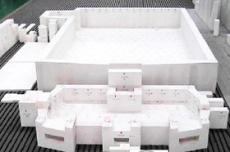
In blast furnaces, they are widely used in the lower shaft, bosh, belly, tuyere zones and cooling wall inserts. They are also ideal for iron runners and slag runners due to high erosion resistance.
They are also applied in high‑temperature zones of hot blast stoves, high‑wear linings in electric arc furnaces, and high‑stress zones in steel ladles and tundishes. The material is also suitable for non‑ferrous metallurgy furnaces and high‑corrosion industrial kilns.
Conventional silicon carbide bricks are cost‑effective and suitable for general high‑temperature and wear‑resistant applications. Nitride‑bonded silicon carbide bricks have superior alkali resistance, slag resistance, thermal shock resistance and high‑temperature strength, making them the preferred material for key parts in modern iron and steel metallurgy.
For mild working conditions, conventional SiC bricks are reliable and economical. For severe high‑temperature, high‑alkali and high‑erosion environments, nitride‑bonded SiC bricks significantly improve furnace life, reduce downtime and improve overall production efficiency.



 HOME
HOME